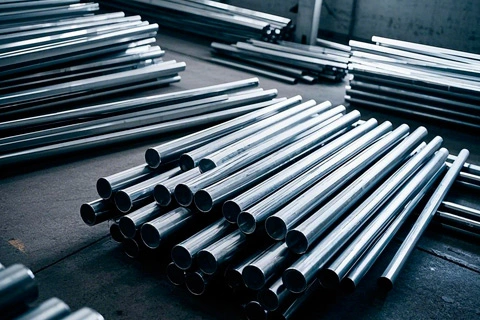
Titanium is widely used in industries such as aerospace, medical, chemical processing, and marine due to its exceptional strength-to-weight ratio, corrosion resistance, and biocompatibility. However, with multiple titanium grades available, selecting the right one can be a challenge—especially when application requirements vary significantly.
In this article, we break down the key factors in titanium grade selection, and help you understand the differences between commercially pure and alloyed titanium.
Understanding Titanium Grades
Titanium is generally categorized into commercially pure (CP) titanium and titanium alloys. The most commonly used grades include:
✅ Grade 1
Characteristics: Softest and most ductile
Corrosion resistance: Excellent
Typical use: Chemical processing, marine environments, architecture
Note: Best choice when formability and corrosion resistance are top priorities
✅ Grade 2
Characteristics: Slightly stronger than Gr1, still easy to form
Corrosion resistance: Very high
Typical use: Heat exchangers, pressure vessels, medical equipment
SEO Tip: A popular choice in titanium for medical and industrial applications
✅ Grade 5 (Ti-6Al-4V)
Characteristics: Most widely used titanium alloy
Strength: High strength, excellent fatigue resistance
Typical use: Aerospace components, automotive parts, surgical implants
Note: Ideal when both strength and lightweight are required
SEO Tip: Frequently searched as Gr2 vs Gr5 titanium, or Titanium Grade 5 for aerospace
✅ Grade 7
✅ Grade 9 (Ti-3Al-2.5V)
Characteristics: Good strength, excellent formability
Application: Tubing in aerospace and sports equipment
Key Factors in Titanium Grade Selection
Choosing the right titanium grade depends on a balance of several factors:
1. Mechanical Properties
If your application requires high strength and durability, titanium alloys like Gr5 or Gr9 are suitable.
For moderate strength and easier forming, Gr2 is an excellent choice.
2. Corrosion Resistance
For environments involving saltwater or chemicals, Gr1, Gr2, and Gr7 offer superior corrosion resistance.
3. Fabrication & Welding
4. Cost Considerations
5. Industry Standards & Certification
Ensure your supplier provides material according to ASTM B265, B348, or AMS specifications.
For aerospace, look for compliance with AMS 4928 or ASTM F136 (for medical-grade alloys).
Titanium Grade Comparison Chart
| Grade | Strength | Corrosion Resistance | Weldability | Common Use |
|---|
| Gr1 | Low | Excellent | Excellent | Marine, Chemical |
| Gr2 | Medium | Excellent | Excellent | Industrial, Medical |
| Gr5 | High | Good | Moderate | Aerospace, Implants |
| Gr7 | Medium | Excellent (with Pd) | Good | Chlorine, Chemical |
| Gr9 | Medium | Good | Excellent | Tubing, Bikes |
Whether you're designing for extreme environments, lightweight structures, or biocompatible applications, choosing the correct titanium grade is critical to achieving performance and longevity. Partnering with a knowledgeable supplier can also help ensure you're getting the right material for your needs.
At Baoji Yuchenghaitai Titanium Industry Co., Ltd., we supply a full range of titanium grades including Gr1, Gr2, Gr5, Gr7, and Gr9, along with custom machining and technical support. Contact us for expert advice and competitive pricing on all your titanium alloy needs.
 English
  日本語
日本語  한국어
한국어  Deutsch
  русский
  العربية