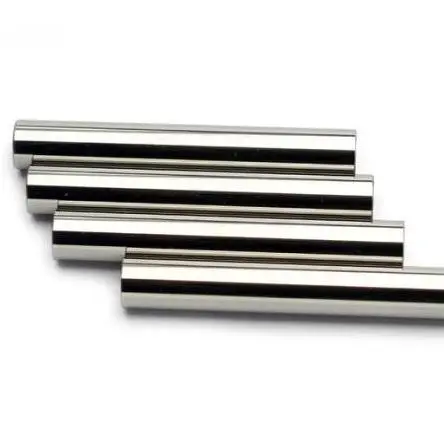
In the world of advanced materials, seamless titanium pipes stand out as a remarkable innovation. These pipes, crafted without any welded joints, offer a plethora of advantages that make them indispensable in various industries.
Exceptional Strength and Lightweight Design
Seamless titanium pipes are renowned for their high strength-to-weight ratio. Titanium, the primary material, is incredibly strong, allowing these pipes to withstand substantial pressure and stress. At the same time, it is lightweight, which is a crucial factor in applications where weight reduction is essential, such as in the aerospace industry. For example, in aircraft manufacturing, seamless titanium pipes are used in fuel systems and hydraulic lines. Their lightweight nature helps to reduce the overall weight of the aircraft, leading to improved fuel efficiency and performance.
Superior Corrosion Resistance
One of the most significant advantages of seamless titanium pipes is their outstanding corrosion resistance. Titanium forms a thin, dense oxide layer on its surface when exposed to air, which acts as a protective barrier. This makes the pipes highly resistant to corrosion in a wide range of environments, including seawater, chemicals, and aggressive industrial atmospheres. In the marine industry, for instance, these pipes are used in seawater intake systems, desalination plants, and shipboard piping. They can endure the harsh saltwater environment without succumbing to corrosion, ensuring long-term reliability and reducing maintenance costs.
High and Low Temperature Performance
Seamless titanium pipes exhibit excellent performance in both high and low temperature conditions. They can maintain their mechanical properties at high temperatures, up to 550 - 600 °C, making them suitable for applications in the chemical and power industries. In chemical reactors and heat exchangers, where high-temperature processes are common, these pipes can safely transport hot fluids. Conversely, at extremely low temperatures, such as -253 °C, they do not become brittle and retain their toughness. This makes them ideal for use in cryogenic applications, like in the storage and transportation of liquefied gases.
Diverse Applications
The unique properties of seamless titanium pipes have led to their widespread use across multiple industries:
Chemical Industry:
Titanium's stability in various acid, alkali, and salt media (except for some specific mineral acids and highly corrosive substances) makes these pipes perfect for chemical processing. They are used in pipelines, reactors, and heat exchangers, ensuring the safe and efficient transfer of corrosive chemicals.
Petroleum Industry:
In the petroleum sector, where organic compounds are prevalent, seamless titanium pipes can be used to make heat exchangers, reactors, high-pressure vessels, and distillation towers. Their corrosion resistance and high strength are crucial in this demanding environment.
Fertilizer Industry:
In the production of urea, a highly corrosive process under high temperature and pressure, titanium pipes have replaced stainless steel in many applications. This has significantly increased the service life of equipment and reduced maintenance requirements.
Seawater Desalination and Shipbuilding Industry:
Given titanium's exceptional resistance to seawater corrosion, seamless titanium pipes are extensively used in seawater desalination plants. In shipbuilding, they are used in various components of ships and deep-water submarines, contributing to the vessel's durability and performance.
Electric Power Industry:
In power plants, especially those using seawater for cooling, seamless titanium pipes are used in condensers and other heat transfer equipment. Their corrosion resistance helps to maintain the efficiency of the power generation process.
Manufacturing Standards and Quality
Seamless titanium pipes are manufactured to strict international standards, such as ASTM B337, ASTM B338, ASME B338, and ASTM B861. These standards ensure that the pipes meet specific requirements regarding dimensions, mechanical properties, and quality. Manufacturers use advanced manufacturing processes, such as extrusion and drawing from a billet, to produce seamless pipes with consistent quality and performance.
 English
  日本語
日本語  한국어
한국어  Deutsch
  русский
  العربية