In precision manufacturing processes such as stamping and deep drawing, the terms titanium foil, titanium strip, and titanium ribbon often describe flat, coiled titanium materials. These terms are frequently used interchangeably across teams, industries, and even generations of engineers, leading to some overlap in everyday discussions or requests for quotations. However, when sourcing high-precision titanium coil for critical applications—where tight tolerances, expensive tooling, and consistent performance are essential—clarifying these distinctions becomes valuable. Understanding typical meanings helps prevent mismatches, safeguards production processes, and ensures the material delivered aligns perfectly with your requirements.
So, What Is the Difference?
While there are no universal rigid definitions, industry conventions provide a useful framework for shared understanding. Titanium foil generally refers to extremely thin material, typically under 0.005 inches (0.127 mm) thick, and often as thin as 0.01 mm or less in specialized cases. This ultra-thin profile makes it lightweight, highly formable, and particularly sensitive to handling, surface imperfections, or tension during processing. It excels in applications requiring minimal weight and intricate micro-scale features.
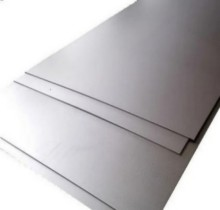
Titanium strip serves as the versatile, mid-range option, commonly spanning thicknesses from about 0.005 inches (0.127 mm) up to around 0.125 inches (3.175 mm) or more, depending on the supplier and grade. This range positions it as the primary choice for reliable, repeatable performance in progressive dies, transfer tooling, and deep draw operations. Engineered for strength, uniformity, and consistency, titanium strip supports high-volume production while maintaining structural integrity.
Titanium ribbon stands apart primarily due to its emphasis on narrow width and specialized geometry rather than thickness alone. It often describes flat, narrow material—frequently with precision edge conditioning, rounded edges, or custom profiles—regardless of exact gauge. This term appears more commonly in contexts involving fine electrical components, transformers, conductors, or legacy specifications from experienced toolmakers.
Ultimately, whether a supplier refers to a product as ribbon while another calls it narrow strip is secondary. The critical factors remain the precise dimensions, tolerances, edge conditions, temper, and performance needs of the application. Alignment on these specifications ensures seamless collaboration and optimal results.
Why Understanding These Terms Still Matters
Grasping the likely intent behind "foil," "strip," or "ribbon" streamlines the initial stages of sourcing and quotation. More importantly, it enables tailored recommendations for nuanced requirements. For instance, requesting ultra-thin titanium at 0.0045 inches for high-speed progressive stamping shifts focus to specialized edge treatments, temper control, and strict limits on camber and flatness to prevent issues like tearing or inconsistent feeding.
Similarly, a call for "ribbon" at 0.020 inches thick and 0.250 inches wide often translates to precision narrow strip achieved through rerolling and slitting master coils, delivering the exact width, edge quality, and surface characteristics your tooling demands. In these cases, the discussion shifts from terminology to functional performance—ensuring the material behaves predictably under real production conditions.
A Quick Word on Tolerances, Burrs, and Setup Sensitivity
Even with high-quality tooling and presses, variations in material can disrupt output. Excessive gauge variation within acceptable limits may accumulate across multiple stations, leading to inconsistent stroke depths, elevated burr formation, part sticking, cracking, or misfeeds that require constant operator intervention. Edge conditions play an equally vital role: a sharp, square edge suitable for one setup might score dies or wear feed guides prematurely in another.
For titanium, which combines high strength with relatively low ductility in some grades, these sensitivities are amplified. Thorough discussions about stroke rates, form depths, burr tolerances, and press adjustments allow for material engineered specifically for the process—minimizing variability and maximizing efficiency.
How We Help You Get the Right Material—No Matter What You Call It
The priority is never policing terminology. Whether you specify foil, strip, or ribbon, the focus remains on translating your description into material that performs reliably. Key considerations include the material's role in the press, required tolerances for finished parts, preferred or problematic edge conditions, and whether the coil supports smooth, high-speed operation without forcing adjustments.
The objective is to deliver titanium coil that becomes "invisible" in the best sense—feeding cleanly, forming consistently, and allowing teams to concentrate on productivity rather than troubleshooting.
Use Your Terms—We’ll Deliver What You Need
The key takeaway is straightforward: you do not need to master exact definitions. Partner with a supplier that listens attentively, probes with targeted questions, and provides titanium tailored to run as intended from the first cycle to the last. In precision manufacturing with titanium, near-perfect is insufficient—reliable, predictable performance across every run is essential.
Whether you refer to it as titanium foil, titanium strip, or titanium ribbon, reach out to discuss your needs. Together, we can ensure your next production run is smoother, more efficient, and more consistent than ever before.
 English
  日本語
日本語  한국어
한국어  Deutsch
  русский
  العربية