In the global materials market, steel has long been hailed as the "workhorse" for its durability. But in recent decades, titanium has emerged as a formidable competitor, especially in high-stakes industries where strength, reliability, and performance are non-negotiable. When pitted against steel in a "battle of strength," titanium doesn’t just hold its own—it pulls ahead in critical areas that redefine modern engineering standards.
Unmatched Strength-to-Weight Ratio: Titanium’s Game-Changing Edge
The biggest advantage of titanium over steel lies in its exceptional strength-to-weight ratio—a metric that makes or breaks applications where weight reduction is as critical as structural strength. Titanium has a density of just 4.51 g/cm³, roughly 45% lighter than steel (7.85 g/cm³). Yet, high-grade titanium alloys (such as Ti-6Al-4V, the most widely used titanium alloy) boast a tensile strength of 860 MPa—comparable to high-strength steel (e.g., A36 steel has a tensile strength of 400-550 MPa), while cutting weight dramatically.
This advantage is a game-changer for the aerospace industry. For example, Boeing’s 787 Dreamliner uses over 15% titanium by weight in its airframe and engine components. Replacing steel with titanium in fuel lines, wing spars, and landing gear parts reduced the aircraft’s total weight by 10-15%, translating to 20% lower fuel consumption and 20% fewer emissions compared to older steel-reliant models. In contrast, steel’s heavier weight forces engineers to compromise: using thicker steel parts to meet strength needs adds bulk, increasing fuel costs and limiting performance.
Superior Corrosion Resistance: Titanium’s "Immunity" to Harsh Environments
Steel’s Achilles’ heel is corrosion—even stainless steel, which contains chromium for protection, succumbs to rust in saltwater, acidic chemicals, or high-humidity industrial settings. Titanium, however, has a natural defense mechanism: when exposed to air or moisture, it forms a thin, dense, self-healing oxide layer (titanium dioxide) that blocks further oxidation. This makes it nearly impervious to corrosion in environments where steel fails.
In the marine and offshore industry, this advantage is irreplaceable. Seawater desalination plants rely on
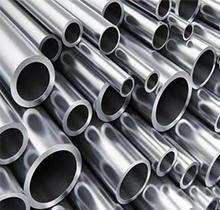
titanium pipes & tubes instead of steel because titanium can withstand constant exposure to saltwater without rusting, while steel pipes require frequent coating or replacement (costing up to $500,000 annually per plant in maintenance). Similarly, deep-sea oil rigs use titanium for subsea wellheads and pipelines—areas where steel would corrode within 5-10 years, but titanium lasts 30+ years with minimal upkeep. Even in chemical plants, where steel reacts with acids like sulfuric acid, titanium tanks and pipes remain intact, cutting downtime and replacement costs.
Exceptional High-and Low-Temperature Performance: Titanium’s Versatility
Steel’s mechanical properties degrade rapidly at extreme temperatures: high-strength steel becomes brittle above 400°C, while low temperatures (-40°C and below) trigger "cold brittleness," causing steel to crack under stress. Titanium, by contrast, maintains its strength and toughness across a wide temperature range—from -253°C (the boiling point of liquid hydrogen) to 600°C.
This versatility shines in two critical sectors:
Cryogenics: In the storage and transport of liquefied natural gas (LNG) or liquid oxygen, titanium tanks replace steel because they don’t crack at -162°C (LNG’s boiling point). Steel tanks, even those alloyed with nickel, require expensive insulation and periodic inspections to prevent brittle failure.
Power Generation: In gas-fired power plants, titanium heat exchangers operate at 500-550°C without losing strength, while steel heat exchangers need frequent repairs due to thermal fatigue. A 2024 study by the International Energy Agency found that titanium components in power plants reduce maintenance costs by 40% compared to steel alternatives.
Biocompatibility: Titanium’s Unique Win in Medical Applications
Steel, even medical-grade stainless steel, contains nickel—a metal that triggers allergic reactions in 10-15% of patients. It also risks corrosion in the human body, leading to implant failure. Titanium, however, is 100% biocompatible: it doesn’t react with bodily fluids, and bone tissue grows directly onto its surface (a process called osseointegration).
This makes titanium the gold standard for medical implants. Over 90% of hip and knee replacements now use titanium alloys, with a 10-year success rate of 95%—far higher than steel implants (75% success rate). Dental implants also rely on titanium: unlike steel, titanium posts don’t corrode or cause inflammation, allowing patients to use them for decades. For trauma surgery (e.g., bone plates for fractures), titanium’s lightweight nature reduces patient discomfort, while its strength ensures the implant holds until the bone heals.
Why Steel Still Lingers—but Titanium Is Gaining Ground
To be clear, steel remains popular for low-cost, low-stakes applications due to its lower price and widespread availability. But in industries where performance, longevity, and safety are critical, titanium’s advantages are undeniable. As manufacturing techniques drive down costs—titanium prices have dropped 30% since 2018—more industries are making the switch.
In the battle of strength, steel may have legacy on its side, but titanium’s unique combination of strength, light weight, corrosion resistance, and versatility makes it the future of high-performance engineering. For engineers, designers, and industry leaders, the choice is no longer "steel by default"—it’s "titanium by design" for projects that demand excellence.
 English
  日本語
日本語  한국어
한국어  Deutsch
  русский
  العربية