Selecting between a titanium square rod and a round bar for components can profoundly affect overall performance, design optimization, manufacturing efficiency, and project costs. Both forms harness titanium's hallmark qualities—remarkable lightweight strength paired with superior corrosion resistance—but their differing cross-sectional shapes align them with distinct engineering requirements and operational demands.
Both titanium square rods and round bars adhere to stringent international standards like ASTM B348, which guarantees reliable and consistent material properties suitable for diverse industries. The fundamental distinction arises from their cross-sectional geometry, directly impacting load distribution, ease of machining, and integration into assemblies.
What Is a Titanium Square Rod?
A titanium square rod is defined by its four flat sides and precise right-angled corners, which facilitate straightforward alignment and welding in structural assemblies. This configuration makes it the preferred option for applications that demand strong resistance to torque, reliable flat contact interfaces, or highly rigid frameworks. Common applications encompass automotive chassis and frame elements, supports for industrial machinery, architectural reinforcement features, and specialized custom CNC-machined parts.
What Is a Titanium Round Bar?
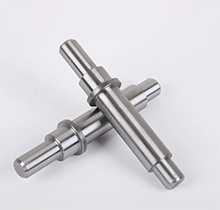
In comparison, a titanium round bar boasts a seamless cylindrical profile that promotes effortless rotation and forming capabilities, rendering it especially well-suited for components subjected to dynamic movement or those necessitating an exceptional surface finish. Typical implementations include medical prosthetics and implants, aerospace fasteners and shafts, hydraulic system elements, and precision-engineered mechanical parts.
Titanium Square Rod Vs. Titanium Round Bar
The shape of the material extends far beyond visual appeal, fundamentally governing behavior under mechanical stress, torsional forces, and various fabrication methods. Square rods deliver higher torque resistance thanks to their angular edges, excel in weldability by allowing simple alignment and joining in frame constructions, offer limited flexibility for bending or rolling operations, and maximize surface contact for robust load-bearing connections. Round bars, conversely, provide moderate torque resistance optimized for rotational freedom, often require additional fixtures for accurate welding, demonstrate excellent suitability for bending and forming processes, and support ideal performance in dynamic, rotating interfaces.
Feature | Titanium Square Rod | Titanium Round Bar |
Shape | Four-sided, flat surfaces | Cylindrical, continuous surface |
Torque Resistance | Higher due to angular edges | Moderate; better for rotation |
Weldability | Easier to align and weld in frames | Requires jigs for precise joining |
Bending & Forming | Limited flexibility | Excellent for bending and rolling |
Surface Contact | Maximized for load-bearing joints | Ideal for dynamic, rotational motion |
For example, a titanium square rod proves most effective in scenarios such as automotive chassis construction or robotic arm housings, where torque handling and load endurance are paramount. A titanium round bar, however, is the superior selection for prosthetic limbs or engine shafts, where fluid, uninterrupted motion remains essential.
Machining characteristics represent another vital factor in shape selection, as both titanium variants share comparable hardness and toughness, yet geometry significantly influences output rates, tool wear, and scrap generation. Square rods benefit from their flat surfaces, which minimize aggressive material removal in CNC milling, result in reduced waste volumes, accelerate setup times for rectangular geometries, and enhance overall cost-effectiveness when fabricating angular components. Round bars shine in turning and lathe-based cylindrical machining tasks—such as producing shafts, bolts, or implants—demand minimal post-processing deburring for superior finishes, but generally produce higher waste when adapted for square or flat features through milling.
Real-World Applications: Which One to Choose?
These distinctions become evident in practical engineering contexts. In automotive and structural domains, including vehicle chassis, drone frames, or machinery base constructions, titanium square rods are preferred. Their flat surfaces streamline welding procedures, bolster torque resistance, and reinforce joint rigidity, ultimately yielding enhanced structural stability and longevity.
Category | Titanium Square Rod | Titanium Round Bar |
Strength-to-Weight Ratio | High | High |
Ease of Welding | Excellent | Moderate |
Ease of Bending/Forming | Limited | Excellent |
Machining Waste | Low | Moderate |
Best For | Frames, structures, fixtures | Shafts, moving parts, implants |
By contrast, titanium round bars dominate in medical and precision-oriented fields, as well as aerospace settings. Their consistent cylindrical form ideally accommodates rotational elements like implants, turbine shafts, and surgical instruments that require smooth kinematics and meticulous machining precision.
Both profiles maintain an outstanding strength-to-weight ratio. Square rods provide excellent ease of welding, limited bending and forming flexibility, lower machining waste for angular parts, and serve best for frames, structures, and fixtures. Round bars offer moderate welding convenience, excellent forming capabilities, moderate waste levels, and prove optimal for shafts, moving components, and implants.
Making the Right Choice for Your Project
The choice between a square rod and a round bar hinges on your specific design objectives. Opt for titanium square rods when prioritizing static, load-bearing, or welded structural applications. Select round bars for rotational, dynamic, or high-precision needs. Always verify compliance with ASTM B348 or equivalent standards to secure dependable performance and quality.
By thoughtfully aligning the material's form with its intended function, you can maximize operational efficiency, minimize expenses, and fully capitalize on titanium's exceptional capabilities in advanced engineering solutions.
 English
  日本語
日本語  한국어
한국어  Deutsch
  русский
  العربية