Titanium welding requires careful control of filler material, shielding conditions, and cleanliness. Selecting the correct titanium welding rod is especially important because an unsuitable filler grade or contaminated welding environment can affect weld strength, corrosion resistance, and long-term component performance.
For industrial buyers and fabricators, rod selection should therefore begin with the base-metal grade and application requirements rather than rod diameter or price alone. Factors such as mechanical properties, service environment, TIG welding conditions, shielding gas, and material traceability should all be considered.
BYC Titanium supplies titanium materials for industrial applications and supports customers requiring suitable grades and specifications for titanium fabrication and welding projects.
How to Select a Titanium Welding Rod
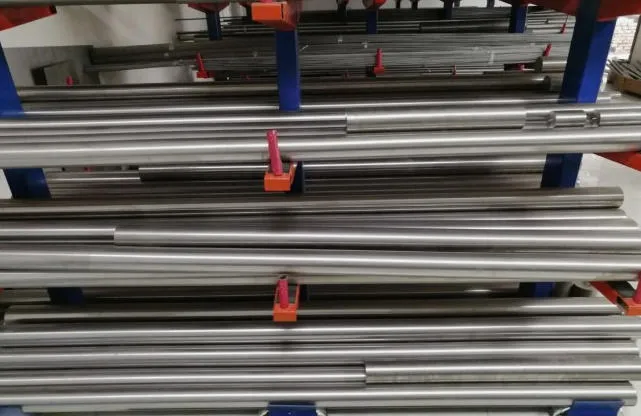
A titanium welding rod is a filler material used to create welded joints between titanium components while maintaining the required mechanical and corrosion-resistant properties.
The first step is to identify the titanium grade being welded and the performance expected from the finished joint. Commercially pure titanium and titanium alloys can have substantially different strength and service requirements, so filler material should be selected according to the applicable welding procedure and engineering specification.
Buyers should consider:
Base-metal grade: Identify the exact titanium grade before selecting filler material.
Service conditions: Consider corrosion, temperature, mechanical loading, and the operating environment.
Rod dimensions: Choose a diameter appropriate for the joint geometry, material thickness, and welding procedure.
Documentation: Confirm required material identification, certification, and traceability before ordering.
For critical applications, the welding procedure specification should determine the final filler selection.
Matching Titanium Welding Rod to Base-Metal Grade
Matching the titanium welding rod to the base metal helps the finished weld achieve the required strength, ductility, corrosion resistance, and service performance.
A common approach is to select a filler composition compatible with the base-metal grade. However, this does not mean every application simply requires an identical nominal grade. Joint design, required mechanical properties, welding procedure qualification, and service conditions can influence filler selection.
This is particularly important when joining different titanium grades. In such cases, choosing a titanium filler rod should be based on the required properties of the complete welded joint rather than selecting material by appearance or general alloy family.
For procurement teams, clearly specifying the base-metal designation and applicable technical standard helps suppliers identify an appropriate product and reduces the risk of receiving unsuitable filler material.
Titanium TIG Welding Rod Specifications
Titanium TIG welding rod specifications should define the material grade, diameter, surface condition, applicable standard, and any certification required for the project.
TIG, or gas tungsten arc welding, is widely used for titanium because it provides precise heat and weld-pool control. The titanium TIG rod must be clean and compatible with the welding procedure to avoid introducing unwanted elements into the joint.
Diameter selection depends on material thickness, joint configuration, deposition requirements, and welding parameters. Surface condition is also important because oils, moisture, dirt, and other contaminants on the rod can affect weld quality.
When sourcing a titanium TIG welding rod, buyers should provide complete specifications rather than ordering only by alloy name. This makes it easier to maintain consistency across production batches and welding procedures.
Shielding Gas and Contamination Control
Effective shielding and contamination control protect hot titanium from atmospheric gases that can degrade weld quality.
Titanium becomes increasingly reactive with oxygen, nitrogen, and hydrogen at elevated temperatures. For this reason, shielding must protect not only the weld pool but also hot surrounding metal until it has cooled sufficiently.
Important controls include:
Use suitable high-purity shielding gas: Argon is commonly used for TIG welding titanium, subject to the qualified welding procedure.
Protect the weld and hot surrounding areas: Torch shielding, trailing shields, and backside purging may be required depending on joint configuration.
Maintain clean surfaces: Remove oil, grease, dirt, moisture, and other contamination from the base material and filler rod.
Watch weld appearance: Significant discoloration can indicate inadequate shielding or contamination and should be evaluated against the applicable acceptance criteria.
Clean preparation and proper shielding are fundamental to repeatable titanium weld quality.
Titanium Welding Rod Storage, Packaging and Supplier Requirements
Titanium welding rods should be stored and packaged to minimize contamination, physical damage, and material mix-ups before welding.
Storage is particularly important because a correctly specified titanium welding electrode can still produce poor results if its surface becomes contaminated before use. Rods should remain clean, dry, and separated from materials that could transfer oils, dust, or metallic contamination.
Packaging should also allow buyers to identify grade, dimensions, batch information, and other required traceability data. For OEM production or regulated applications, buyers may additionally require material certificates or documentation linked to individual production lots.
A capable supplier should understand these requirements and provide consistent materials rather than treating welding rod as a generic consumable.
How to Evaluate a Titanium Welding Rod Supplier
A reliable titanium welding rod supplier should demonstrate material control, specification accuracy, traceability, and consistent supply capability.
Price is only one part of supplier evaluation, particularly when filler materials are intended for critical components.
Industrial buyers should evaluate:
Grade control and identification: Materials should correspond to the specifications stated in the purchase order.
Quality documentation: Required certificates and traceability information should be available when specified.
Dimensional consistency: Rod diameter and supplied condition should remain consistent across orders.
Supply capability: The supplier should support required quantities, specifications, packaging, and repeat purchasing.
BYC Titanium supports industrial customers requiring titanium materials for fabrication and manufacturing. Clear communication of grade, size, standard, quantity, and documentation requirements allows the supplier and buyer to establish a more reliable procurement process.
Conclusion
Selecting the right titanium welding rod requires more than finding a filler material labeled for titanium. Base-metal grade, mechanical requirements, corrosion conditions, TIG welding specifications, shielding practices, cleanliness, and traceability all influence the quality of the finished weld.
For procurement teams, complete technical specifications can reduce material-selection errors and improve consistency between production batches. BYC Titanium supports customers requiring titanium materials for industrial fabrication, with attention to material specifications and project requirements.
Titanium Welding Rod FAQs
1. How do I choose a titanium welding rod?
Start with the base-metal grade, then consider the qualified welding procedure, required mechanical properties, service environment, rod diameter, and applicable specifications.
2. Is titanium filler rod always the same grade as the base metal?
Not necessarily. Filler selection depends on the base materials, joint requirements, service conditions, and approved welding procedure.
3. What shielding gas is commonly used for TIG welding titanium?
Argon is commonly used, although the exact shielding arrangement and gas requirements should follow the applicable welding procedure.
4. Why is cleanliness important when welding titanium?
Hot titanium reacts readily with atmospheric gases and contamination, which can reduce weld quality and affect mechanical performance.
5. How should titanium welding rods be stored?
They should be kept clean, dry, properly identified, and protected from oils, dirt, moisture, and cross-contamination.
6. What information should I provide when ordering titanium welding rods?
Provide the required grade, diameter, quantity, applicable specification, packaging requirements, and any certification or traceability requirements.
 English
  日本語
日本語  한국어
한국어  Deutsch
  русский
  العربية