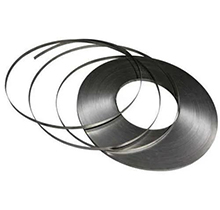
For industrial structures and fabricated components where corrosion resistance, low weight, and mechanical performance matter, titanium square tubing can provide a useful alternative to conventional metal tubing. Its flat faces also make it practical for certain frames, supports, assemblies, and custom-fabricated components where connection geometry is important.
However, sourcing titanium tubing requires more than specifying an outside dimension. Buyers should consider grade, wall thickness, dimensional tolerances, corner radius, manufacturing condition, welding or machining requirements, and inspection documentation. These factors influence both fabrication performance and total procurement cost.
BYC Titanium supplies titanium materials for industrial manufacturing and supports customers requiring different grades, dimensions, and customized material specifications.
What Is Titanium Square Tubing?
Titanium square tubing is a hollow titanium product with a square cross-section, selected for applications requiring corrosion resistance, reduced weight, structural performance, and flat mounting surfaces.
Unlike solid titanium bar or block, tubing creates a hollow section that can reduce material weight while retaining useful structural characteristics. Square geometry provides four flat surfaces, which can simplify joining, positioning, and integration into certain fabricated assemblies.
A titanium square tube may be specified according to outside dimensions, wall thickness, length, titanium grade, dimensional tolerance, and surface condition. The appropriate specification depends on whether the material will be welded, machined, formed, or used directly in an assembly.
For B2B procurement, these details should be established before requesting a quotation because nominal tube size alone does not define the finished product requirements.
Titanium Square Tubing vs Rectangular and Round Tubes
Square, rectangular, and round titanium tubes differ primarily in cross-sectional geometry, which affects fabrication, structural behavior, connection design, and application suitability.
There is no universally superior tube shape. Selection should be based on the geometry and loading requirements of the finished component.
| Factor | Square Tubing | Rectangular Tubing | Round Tubing |
|---|
| Cross-section | Equal-width sides | Unequal width and height | Circular |
| Flat mounting surfaces | Four | Four | None |
| Orientation | Symmetrical on two main axes | Direction-dependent | Uniform around axis |
| Typical selection reason | Frames and fabricated structures | Space-specific structures | Fluid or general tubular applications |
Titanium rectangular tubing can be useful when a design requires different width and height dimensions, while round tubing is often preferred when circular geometry better matches the application.
The final decision should consider loads, joining method, available space, and downstream fabrication rather than appearance alone.
Grade, Wall Thickness and Corner Radius
Grade, wall thickness, and corner radius are key specifications because they influence titanium square tubing performance, manufacturability, dimensions, and cost.
Before ordering, procurement teams should define the intended application and downstream process.
Titanium grade: Select the grade according to required strength, corrosion resistance, temperature conditions, and applicable engineering specifications.
Wall thickness: Thickness affects weight, structural behavior, welding conditions, and material usage.
Corner radius: Square tubing normally has radiused rather than perfectly sharp corners, so corner requirements should be considered when mating parts or machining are involved.
Tolerance: Outside dimensions, wall thickness, straightness, and length tolerances should match downstream manufacturing requirements.
Over-specifying tolerances can increase production cost unnecessarily, while loose specifications can create problems during assembly. Buyers should therefore define tolerances according to functional requirements.
Welding and Machining Titanium Square Tubing
Titanium square tubing can be welded and machined successfully when appropriate procedures are used to control contamination, heat, tooling, and dimensional accuracy.
For welding, titanium requires careful cleaning and effective inert-gas shielding because heated titanium can react with atmospheric gases. Joint surfaces should be free from oil, moisture, dirt, and cross-contamination. Depending on the joint configuration, additional trailing or backside shielding may also be required under the qualified welding procedure.
Machining requires attention to heat generation, cutting conditions, and tool selection. The flat surfaces of square tubing can simplify positioning in some machining operations, but thin walls may require appropriate workholding to prevent deformation.
When purchasing custom titanium tube for further fabrication, informing the supplier about the intended welding or machining process can help establish more appropriate dimensional and material requirements.
Custom Titanium Tubing Procurement Checklist
A titanium tubing procurement specification should clearly communicate material, dimensions, quantity, fabrication condition, and quality requirements to the supplier.
For custom or production orders, buyers should confirm:
Material requirements: Specify titanium grade and any applicable material standard.
Dimensions: Define outside dimensions, wall thickness, length, corner requirements, and necessary tolerances.
Surface and processing condition: State whether additional machining, cutting, or particular surface preparation is needed.
Inspection and documentation: Identify required material certificates, inspection records, testing, or traceability.
Order quantity: Provide prototype, batch, or recurring production requirements so manufacturing and delivery can be evaluated properly.
Clear specifications make quotations easier to compare and reduce the possibility of receiving material that requires unexpected rework.
Where Is Titanium Square Tubing Used?
Titanium square tubing is primarily considered for fabricated structures and components where its combination of corrosion resistance, weight reduction, and square geometry provides a practical engineering advantage.
Potential applications depend heavily on titanium grade and engineering design. Titanium tubing may be considered for chemical-processing structures exposed to corrosive environments, marine assemblies requiring corrosion resistance, aerospace or transportation components where weight matters, and specialized industrial frames or supports.
Square sections can also be useful when equipment designs require flat mating surfaces or straightforward positioning of adjoining components.
However, material selection should always be based on actual mechanical loads, service environment, fabrication requirements, and applicable industry standards rather than selecting titanium solely for its general material properties.
Why Source Titanium Tubing from BYC Titanium?
BYC Titanium supports industrial customers requiring titanium tubing and other titanium materials with project-specific grades, dimensions, and procurement requirements.
For B2B projects, reliable sourcing begins with clear communication between the buyer and material supplier. Grade, dimensions, tolerances, quantities, surface requirements, and documentation should be confirmed before production.
BYC Titanium works with customers requiring titanium materials for fabrication and industrial manufacturing. For customized projects, providing drawings or detailed specifications can help establish whether the required tubing dimensions and processing requirements are practical for production.
Conclusion
Selecting titanium square tubing requires a balance between material performance, geometry, fabrication requirements, and procurement cost. Grade and wall thickness affect mechanical performance, while corner radius and dimensional tolerances can directly influence assembly and downstream processing.
Buyers comparing square, rectangular, and round titanium tubes should select the geometry according to the actual component design rather than assuming one shape is inherently better. For custom requirements, defining the complete specification before ordering can reduce rework and improve production consistency.
BYC Titanium supports industrial customers sourcing titanium materials for customized fabrication and manufacturing applications.
Titanium Square Tubing FAQs
1. What is titanium square tubing used for?
It can be used for specialized frames, supports, fabricated assemblies, and other components where titanium properties and flat tube surfaces provide an engineering advantage.
2. What is the difference between square and rectangular titanium tubing?
Square tubing has equal-width sides, while rectangular tubing has different width and height dimensions.
3. Can titanium square tubing be welded?
Yes. Titanium tubing can be welded using appropriate procedures with careful cleaning and effective inert-gas shielding.
4. How should I choose the wall thickness?
Wall thickness should be determined from structural requirements, fabrication needs, weight targets, and applicable engineering calculations or standards.
5. Can titanium square tube dimensions be customized?
Custom dimensions may be available depending on grade, size, quantity, manufacturing method, and supplier capabilities.
6. What information should I provide when requesting a quotation?
Provide grade, outside dimensions, wall thickness, length, tolerance, quantity, surface condition, applicable standards, and required inspection or certification.
 English
  日本語
日本語  한국어
한국어  Deutsch
  русский
  العربية