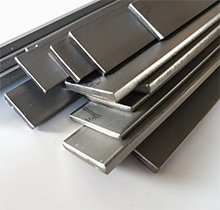
A titanium flat bar is a rectangular solid titanium product commonly used as raw material for structural components, machined parts, supports, brackets and corrosion-resistant industrial equipment. Unlike thin titanium strip or sheet, flat bar is generally selected when the component requires greater thickness, structural rigidity or additional machining allowance.
Choosing the correct titanium flat bar requires more than specifying width and thickness. Titanium grade, dimensional tolerance, flatness, surface condition, length and downstream machining requirements can all influence cost and final component performance.
BYC Ti supplies titanium flat bar in multiple grades and custom dimensions for aerospace, marine and industrial applications. Its published range includes thicknesses of 2–60 mm, widths of 10–300 mm and lengths up to 6000 mm.
What Is Titanium Flat Bar?
Titanium flat bar is solid rectangular titanium stock characterized by a relatively greater width than thickness and supplied in straight lengths for structural or machining applications.
The material sits between conventional bar stock and plate in many engineering applications. It can be supplied as rolled, forged, ground, polished or machined stock depending on dimensional requirements.
Compared with round or square bar, titanium flat stock can reduce machining when the finished component already has a rectangular cross-section. Components such as mounting plates, structural supports, reinforcement members and machined blocks can therefore begin closer to final geometry.
Titanium also provides low density, corrosion resistance and useful mechanical strength. These characteristics make flat bar attractive where weight and environmental durability are important.
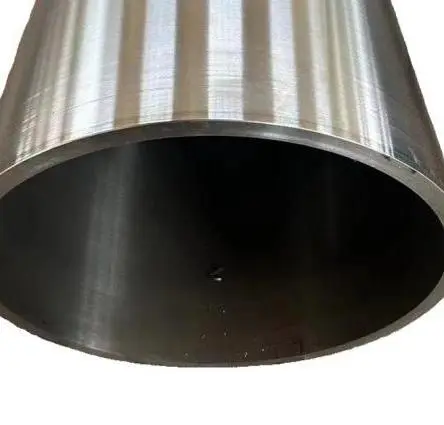
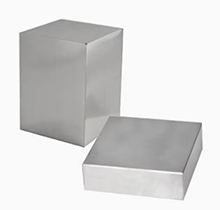
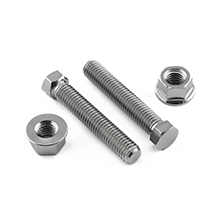
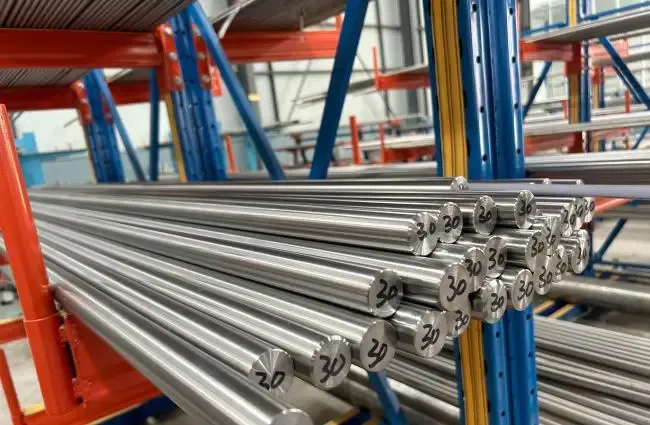
BYC Ti's wider titanium rods and bars portfolio includes round, square, hexagonal, flat and special-shaped bars, allowing the starting material to be selected according to final part geometry.
Common Titanium Flat Bar Grades and Standard Dimensions
Titanium flat bar grades should be selected according to required strength, corrosion resistance, formability and applicable material standards.
Commercially pure Grades 1 and 2 are often used where corrosion resistance and fabrication are priorities. Grade 5 Ti-6Al-4V provides higher mechanical strength and is widely used for aerospace and high-load components. Grade 23 Ti-6Al-4V ELI offers lower interstitial content and is commonly associated with medical and other demanding applications.
| Grade | General Characteristic | Typical Flat-Bar Use |
|---|
| Grade 1 | High ductility and corrosion resistance | Chemical and formed components |
| Grade 2 | Balanced strength and corrosion resistance | Marine and industrial parts |
| Grade 5 | High strength-to-weight ratio | Aerospace and structural components |
| Grade 23 | Ti-6Al-4V ELI | Medical and precision components |
BYC Ti lists GR1, GR2, GR5 and GR23 among available titanium flat bar stock grades, with standard manufacturing capability from 2 to 60 mm in thickness and 10 to 300 mm in width. Special sizes are available according to project requirements.
For material specifications, the current ASTM B348/B348M-25 standard covers titanium and titanium-alloy bars and billets and includes requirements for chemical composition and mechanical testing.
Grade 5 bar may also be specified to aerospace requirements such as SAE AMS4928X, which covers annealed Ti-6Al-4V bars and related product forms.
Thickness, Width and Flatness Tolerances
Titanium flat bar tolerances define how closely actual thickness, width, straightness and flatness must match the nominal dimensions specified on the drawing or purchase order.
Thickness and width directly influence both final part dimensions and machining allowance. If the bar is excessively oversized, additional machining increases material loss and cycle time. If there is insufficient allowance, surface defects or dimensional variation may prevent the finished component from meeting specification.
Flatness is particularly important when a long section will form a mounting surface or when several parts will be machined from one bar. Excessive bow or twist can affect fixturing and increase machining time.
Tolerance requirements should therefore reflect the final application. A rough-machined structural component may tolerate greater dimensional variation than a precision aerospace part.
Buyers should also specify edge condition and surface finish. Ground or polished material can offer improved surface consistency, while rougher stock may be acceptable where all external surfaces will later be machined.
Industrial Uses of Titanium Flat Stock
Titanium flat stock is used where rectangular geometry, corrosion resistance, low weight and structural strength are required in a machined or fabricated component.
Typical applications include:
Aerospace structures: mounting supports, reinforcement members and precision-machined components.
Marine equipment: corrosion-resistant supports, frames and underwater hardware.
Chemical processing: brackets, internal supports and equipment components exposed to aggressive media.
Medical manufacturing: blanks for precision components where suitable titanium grades are specified.
Industrial machinery: wear-resistant or corrosion-resistant structural and machined parts.
The starting geometry can influence manufacturing efficiency. If the final component is wide and relatively thin, using flat bar titanium instead of oversized round or square stock may substantially reduce material removal.
Grade selection should still be application-specific. Grade 2 may be preferred for corrosion-focused marine or chemical components, whereas Grade 5 titanium flat bar is more appropriate where higher structural strength is required.
How to Order Custom Titanium Flat Bar
Ordering custom titanium flat bar requires clearly defining grade, dimensions, tolerances, surface condition, quantity and certification before production.
A complete RFQ should normally include:
Titanium grade and standard: such as Grade 2 or Grade 5 with the required ASTM, AMS or customer specification.
Dimensions: thickness × width × length, with units clearly stated.
Tolerance requirements: identify critical thickness, width, straightness and flatness limits.
Surface condition: specify pickled, polished, ground or machined finish where necessary.
Quantity: state total length, number of bars or finished blank quantity.
Documentation: identify material certificates, inspection reports or traceability requirements.
Customers should also indicate whether the stock will be used directly or machined into finished parts. This helps determine appropriate machining allowance and surface quality.
For projects requiring more than raw material, BYC Ti also provides custom titanium CNC machining parts, allowing titanium flat stock to be converted into application-specific components.
Providing complete dimensional and processing information at the quotation stage reduces the risk of ordering material that is technically correct in grade but unsuitable for the final manufacturing process.
Conclusion
Selecting the right titanium flat bar requires coordinating titanium grade, thickness, width, tolerance, surface condition and final application. Grade 2 offers a useful balance of corrosion resistance and fabrication, while Grade 5 provides higher strength for structural and aerospace requirements.
For buyers, the most effective approach is to specify the complete titanium flat bar stock requirement rather than requesting material by width and thickness alone. BYC Ti supplies standard and custom flat-bar sizes for marine, aerospace, medical and industrial manufacturing projects.
Titanium Flat Bar FAQs
What is titanium flat bar used for?
It is used for structural supports, brackets, machined components, marine hardware and industrial parts requiring corrosion resistance and low weight.
What grades are available for titanium flat bar?
Common options include Grades 1, 2, 5 and 23, depending on dimensions and application requirements.
What sizes of titanium flat bar does BYC Ti supply?
BYC Ti lists thicknesses of 2–60 mm, widths of 10–300 mm and lengths up to 6000 mm, with custom sizes available.
What is the difference between titanium flat bar and titanium plate?
Flat bar is generally supplied as narrower rectangular bar stock, while plate is typically wider sheet-like material. Actual definitions can depend on the governing standard and dimensions.
Can titanium flat bar be CNC machined?
Yes. Titanium flat bar is commonly machined into brackets, supports and precision components.
What information should I provide for a titanium flat bar quote?
Specify grade, standard, thickness, width, length, tolerances, surface finish, quantity and certification requirements.
 English
  日本語
日本語  한국어
한국어  Deutsch
  русский
  العربية