Selecting the right titanium mesh ribbon is essential for electrochemical, cathodic protection, and industrial processing applications where corrosion resistance, electrical conductivity, and long service life are critical. Compared with conventional metal meshes, titanium mesh ribbon offers an excellent strength-to-weight ratio, outstanding chemical stability, and compatibility with advanced mixed metal oxide (MMO) coatings.
Today, titanium mesh ribbon is widely used as the substrate for MMO ribbon anode systems in cathodic protection, chlorine production, water treatment, and other electrochemical industries. Understanding mesh construction, dimensions, and procurement requirements helps engineers and purchasing managers choose products that deliver reliable long-term performance.
What Is Titanium Mesh Ribbon?
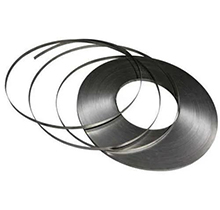
A titanium mesh ribbon is a flat expanded mesh manufactured from high-purity titanium strip. The mesh structure provides excellent electrical conductivity, mechanical strength, and corrosion resistance while maintaining excellent flexibility.
Depending on the application, the ribbon can be supplied as bare titanium or coated to produce an MMO ribbon anode for impressed current cathodic protection (ICCP) systems. Compared with solid strips, titanium wire mesh ribbon provides a larger active surface area, resulting in more uniform current distribution and higher electrochemical efficiency.
Titanium naturally forms a protective oxide layer, making titanium mesh ribbon highly resistant to seawater, concrete, soil, and aggressive chemical environments. This durability makes it a preferred material for long-life industrial projects.
Titanium Mesh Ribbon Structures and Mesh Specifications
Different applications require different titanium mesh ribbon structures and dimensions. Manufacturers typically customize the ribbon according to current density, installation method, coating type, and environmental conditions.
| Specification | Typical Options | Selection Consideration |
|---|
| Material Grade | ASTM Grade 1, Grade 2 | Corrosion resistance and strength |
| Ribbon Width | Customized | Current distribution |
| Thickness | Customized | Mechanical strength |
| Mesh Opening | Various mesh sizes | Surface area and flexibility |
| Surface | Bare titanium or MMO coated | Application requirements |
The structure of titanium wire mesh ribbon directly affects electrical performance, coating adhesion, and installation flexibility. When manufactured as an MMO ribbon anode, the titanium substrate is coated with mixed metal oxides to provide higher electrochemical activity and longer service life.
Applications of Titanium Mesh Ribbon in Electrochemical and Industrial Systems
The excellent corrosion resistance and conductivity of titanium mesh ribbon make it suitable for a wide range of industrial applications.
Common applications include:
Cathodic protection systems for pipelines, storage tanks, reinforced concrete, and marine structures using MMO ribbon anode technology.
Water treatment and electrochlorination systems requiring stable electrochemical performance.
Chlor-alkali production and other chemical processing equipment.
Electroplating and electro-winning systems requiring uniform current distribution.
Offshore and marine infrastructure exposed to highly corrosive environments.
Compared with conventional electrode materials, titanium mesh ribbon offers lower maintenance requirements, higher efficiency, and a significantly longer service life.
How to Specify Titanium Mesh Ribbon Width, Thickness and Mesh Size
Selecting the correct titanium mesh ribbon begins with understanding the project's operating conditions and electrical requirements. Ribbon width, thickness, mesh opening, titanium grade, coating type, and operating current all influence overall performance.
For example, reinforced concrete cathodic protection systems often require customized MMO ribbon anode products with specific coating formulations and mesh dimensions. Environmental conditions such as soil resistivity, chloride concentration, operating temperature, and expected design life should also be evaluated during product selection.
Working with an experienced manufacturer helps ensure the selected titanium wire mesh ribbon meets both performance and durability requirements.
Titanium Mesh Ribbon RFQ Checklist
Providing complete technical information allows suppliers to recommend the most suitable titanium mesh ribbon and prepare accurate quotations.
Before sending an inquiry, buyers should prepare the following information:
Required ribbon width, thickness, and total length.
Titanium grade and whether an MMO ribbon anode coating is required.
Mesh opening size or technical drawings.
Operating environment, such as soil, concrete, seawater, or chemical solution.
Required current output, design life, and applicable standards.
A complete RFQ reduces engineering revisions, shortens production time, and helps ensure the supplied titanium mesh ribbon matches project requirements. BYCTI manufactures customized titanium products for electrochemical, marine, environmental, and industrial applications with strict quality control and reliable technical support.
FAQ About Titanium Mesh Ribbon
What is the difference between titanium mesh ribbon and titanium wire mesh ribbon?
The two terms are often used interchangeably. Titanium wire mesh ribbon generally refers to the mesh structure, while titanium mesh ribbon describes the finished ribbon product.
When should an MMO ribbon anode be used?
An MMO ribbon anode is recommended for impressed current cathodic protection and electrochemical systems that require high conductivity and long service life.
Which titanium grade is commonly used for titanium mesh ribbon?
ASTM Grade 1 and Grade 2 titanium are the most commonly used because they provide excellent corrosion resistance and mechanical performance.
Can titanium mesh ribbon be customized?
Yes. Width, thickness, mesh size, length, and MMO coating can all be customized according to project requirements.
What information is needed for an RFQ?
Provide the ribbon dimensions, titanium grade, coating requirements, application environment, and operating conditions to receive an accurate quotation.
 English
  日本語
日本語  한국어
한국어  Deutsch
  русский
  العربية